
Play Aviator Now!
Home → Auto Cashout
Aviator Auto Cashout
Auto cashout in Aviator
The auto cashout feature is a core mechanic within the Spribe title, allowing players to predefine a multiplier threshold for automatic withdrawal. This tool functions by closing the bet instantly when the rising curve hits the chosen value, effectively removing manual reaction time from the equation. The system does not alter the built-in house edge of 3.00%, but it enforces strict discipline against emotional delays during rapid rounds.
Aviator round parameters
| Max multiplier | x1,000,000 |
| RTP | 97.00% |
| Bet range | 0.10 EUR / USD / GBP (varies by operator) - 100 EUR / USD / GBP (varies by operator) |
Aviator utilizes SHA-256 cryptography to ensure provably fair outcomes, combining server and client seeds with a nonce for each round. While the mathematical fairness remains constant regardless of input method, automation guarantees that the player exits before the plane flies away at any random point. This certification by iTech Labs and BMM Testlabs provides a verified baseline for trust in every automated transaction.
Spribe also offers Dice, another title with an RTP of 97.00% where volatility is adjustable by the user. Unlike the fixed crash mechanic of Aviator, Dice allows players to tweak risk parameters directly, whereas auto cashout in the flight game only manages exit timing. Both titles share the same theoretical return, yet they offer distinct strategic approaches to bankroll management.
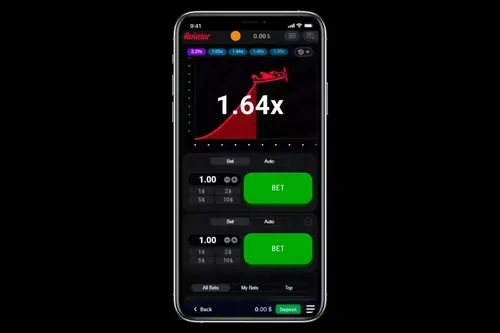
Setting a target multiplier
A target multiplier defines the precise moment the software executes the cashout command, locking in profits before the inevitable crash occurs. Players typically set this value between x1.10 and higher thresholds, depending on their risk tolerance and the specific session goals. The maximum potential win in this environment is capped at x1,000,000, providing a clear upper limit for high-risk strategies.
The theoretical return to player (RTP) stands at 97.00%, representing the average payout over hundreds of thousands of rounds rather than a single session forecast. Operators may configure lower variants such as 96% or 94%, which increases the house advantage beyond the standard 3.00%. Understanding these variations is critical when selecting a platform, as the base game math remains consistent across providers.
Unlike slots which rely on paylines and spins, Aviator operates on a continuous rising curve that can end at any millisecond. A target of x2.00 requires the plane to survive twice the initial stake value before crashing, a statistical event that happens less frequently than low multipliers. This distinction separates crash games from traditional reel-based mechanics found in other casino categories.
Why automation removes hesitation
Human reaction time introduces a variable delay between seeing the target and clicking the button, often resulting in missed exits during fast crashes. Automation eliminates this latency by executing the trade exactly when the mathematical condition is met, ensuring precision in every single round. This consistency is vital for players employing staking plans that rely on exact entry and exit points.
The dual-bet mode allows players to place two simultaneous wagers, with one potentially using auto cashout while the other is managed manually. This setup enables hedging strategies where one bet covers losses while the other seeks higher multipliers up to the x1,000,000 cap. Such complexity is impossible to manage effectively without automated tools handling at least one leg of the strategy.
Provably fair technology ensures that the crash point is determined before the round begins, making hesitation purely a psychological barrier rather than a mathematical one. By removing the need for split-second decisions, players can focus on bankroll allocation rather than reflex testing. This approach aligns with the analytical nature of the game, which favors calculated risks over adrenaline.
Low targets versus high targets
Low target multipliers, such as x1.10 or x1.20, trigger cashouts frequently but yield smaller profits per round, requiring more volume to achieve significant gains. High targets like x10.00 or x100.00 occur rarely, meaning long dry spells between wins, but provide substantial payouts when they hit. The choice between these extremes dictates the volatility profile of the player's session experience.
With an RTP of 97.00%, the long-term expectation remains neutral regardless of the target size, though short-term variance differs drastically. Setting a low target reduces the frequency of total loss events, stabilizing the bankroll over time compared to chasing high multipliers. This stability is particularly relevant given that operators might offer reduced RTP configurations like 94% in some jurisdictions.
Spribe’s Dice game offers adjustable volatility, allowing users to mimic the risk profiles of different Aviator targets without relying on random crash points. In contrast, Aviator’s crash mechanism is entirely random, forcing players to adapt their target settings dynamically based on current balance. This flexibility in Dice contrasts with the rigid structure of the flight game’s multiplier curve.
Auto bet alongside auto cashout
Auto bet functionality enables the continuous placement of wagers without manual intervention, working in tandem with auto cashout to create fully autonomous rounds. This combination allows for hands-off play where the system handles both the entry and exit of every transaction automatically. Such automation is essential for players monitoring multiple tables or managing complex betting algorithms.
The maximum win cap of x1,000,000 applies to the total payout of a single round, regardless of whether the bet was placed manually or via automation. High-volume auto betting strategies must account for this limit when calculating potential returns against the 3.00% house edge. Exceeding this cap is impossible, defining the absolute ceiling for any successful streak.
Welcome bonuses often include free spins for slot games, which are irrelevant to the crash mechanics of Aviator and cannot be used here. Instead, players should look for deposit matches like the 300% bonus up to €2,000, which applies to the main wallet used for betting. Distinguishing between spin-based rewards and cash bets is crucial for maximizing value in instant games.
Aviator: key facts
| Parameter | Value |
|---|---|
| Game | Aviator |
| Studio | Spribe |
| Released | 2019 |
| RTP | 97.00% |
| House edge | 3.00% |
| Max win | x1,000,000 |
Choosing a cashout target
The theoretical RTP of 97.00% for Aviator by Spribe defines the long-term expected return over hundreds of thousands of rounds, establishing a 3.00% house edge that remains constant regardless of individual player choices. This mathematical baseline implies that no specific multiplier choice can alter the built-in statistical advantage held by the operator in any single session. Players selecting higher targets face increased variance, which does not improve the underlying percentage but changes the distribution of wins and losses.
A maximum win cap of x1,000,000 sets the absolute upper limit for a single round, creating a hard boundary for potential payouts that distinguishes this crash game from traditional slots with infinite reel combinations. The provably fair mechanism using SHA-256 ensures that the server seed combined with client seeds determines the crash point transparently before the round begins. This certification by iTech Labs and BMM Testlabs provides technical assurance that the multiplier trajectory is random and not manipulated after bets are placed.
Unlike Plane Game which also offers a high volatility profile and an identical 97.00% RTP, Aviator requires active decision-making to cash out before the plane flies away rather than waiting for static symbol alignments. The dual-bet mode allows players to split their stake between a conservative low-multiplier target and a risky high-multiplier attempt within the same round structure. This configuration enables more granular risk management compared to games that offer only a single betting option per spin.
Frequency against payout size
The continuous rise of the multiplier in each round creates a direct inverse relationship between the frequency of wins and the size of the payout, as higher multipliers occur less often in the probability distribution. A cashout at x2.00 happens significantly more frequently than a cashout at x100.00, yet both outcomes contribute to the same overall 97.00% theoretical return over time. This dynamic requires players to balance their desire for frequent small wins against the potential for larger, less common payouts.
Auto cashout functionality removes reaction time from the outcome by closing a bet automatically at a chosen multiplier, effectively locking in a specific frequency-payout ratio without manual intervention. While it simplifies the process, it does not change the built-in 3.00% house edge or the underlying probability of the plane flying away before reaching the set threshold. Users relying on automation must accept that the system will execute trades strictly according to pre-set parameters regardless of real-time visual cues.
Comparing this mechanic to other instant games reveals that Aviator’s lack of reels and paylines means every round is a unique event with a continuously rising multiplier rather than discrete spin outcomes. The multiplayer live bet feed displays real-time stakes and cashouts, allowing players to observe the collective behavior of others without influencing the independent RNG result. This transparency highlights how individual timing decisions impact personal returns relative to the broader group activity.
Testing targets in demo
Spribe released Aviator in 2019 with a design that emphasizes rapid rounds and immediate feedback, making demo modes essential for understanding the speed at which multipliers typically crash. Testing different cashout targets in a risk-free environment helps players gauge the variance inherent in the 97.00% RTP without risking actual funds. This practice allows users to experience the provably fair algorithm’s output distribution over many simulated rounds before committing capital.
The maximum win potential of x1,000,000 suggests that extremely high multipliers are possible but statistically rare, requiring patience and a strategy tolerant of long losing streaks. In demo play, observing how often the plane flies away below x1.50 versus how rarely it reaches double digits provides empirical data on hit frequency. Such observation aids in calibrating personal expectations regarding the realistic pace of bankroll depletion or growth.
Unlike traditional slot machines where paylines and symbols dictate outcomes, Aviator’s crash mechanic means every round starts fresh with a new random multiplier generated via SHA-256. This independence ensures that past results in a demo session have zero predictive value for future rounds, reinforcing the necessity of treating each flight as an isolated event. Players should verify that the demo interface accurately reflects the real-money version’s speed and visual cues to ensure valid testing conditions.
Adjusting after a losing streak
A losing streak in Aviator does not alter the fixed 97.00% RTP or increase the likelihood of a subsequent win, as each round’s outcome is determined independently by the server and client seeds. Increasing bet sizes to recover losses, known as martingale strategies, fails because the house edge of 3.00% applies equally to every wager regardless of previous results. The max win cap of x1,000,000 limits upside potential while downside risk remains unlimited if the plane crashes before cashout.
The dual-bet mode offers a structural alternative by allowing one stake to secure early profits while another chases higher multipliers, potentially mitigating the psychological impact of consecutive losses. By splitting wagers, players can maintain a positive balance longer during volatile periods without needing to predict the exact crash point. This approach leverages the game’s unique mechanics to diversify risk exposure within a single round cycle.
Compared to games with fixed volatility settings, Aviator’s variable multiplier path requires dynamic adjustment of cashout targets based on current bankroll status rather than static paytable rules. Lowering targets temporarily during a downturn reduces variance and extends playtime, aligning with the theoretical return over a very long run. This tactical shift acknowledges that short-term results deviate significantly from the 97.00% average due to inherent randomness.
When to turn automation off
Automation via auto cashout closes a bet automatically at a chosen multiplier, removing the need for manual input but also eliminating the ability to react to sudden changes in game flow or external distractions. Turning off automation restores manual control, allowing players to decide whether to hold for a higher multiplier or secure profits immediately based on visual assessment of the rising curve. This switch reintroduces human error but also allows for adaptive strategies responsive to real-time conditions.
The provably fair system ensures that the crash point is predetermined by SHA-256 hashes, meaning manual intervention cannot influence the outcome but can optimize the realization of existing probabilities. Players may choose to disable automation when they suspect connection latency might cause missed cashouts at critical multipliers near the crash point. This precaution addresses technical risks rather than mathematical ones, acknowledging that network delays can disrupt even correctly timed manual actions.
Unlike Plane Game which shares similar high volatility traits, Aviator’s live feed aspect encourages social observation that manual play facilitates more effectively than silent automated trading. Watching other players’ cashout points can provide informal benchmarks for reasonable multiplier thresholds in the current session context. Disabling automation thus enhances engagement with the community features while maintaining strict adherence to the game’s independent RNG integrity.
Double bet setups
Aviator offers a dual-bet mode that allows players to place two separate wagers simultaneously within the same round. This setup enables distinct strategic approaches, such as securing one profit while chasing higher multipliers with the second stake. The game mechanics remain consistent for both bets, relying on the rising multiplier rather than random symbol combinations or reel stops.
Spribe designed this feature to accommodate varied risk appetites without complicating the core crash gameplay loop of cashing out before the plane departs. Players can configure independent auto-cashout thresholds for each wager, allowing precise control over exit points regardless of market volatility. This flexibility supports complex betting patterns while maintaining the transparency provided by the provably fair SHA-256 algorithm.
The theoretical return for Aviator stands at 97.00%, though operators may adjust this figure downward to 96% or even 94%. Such variations directly impact the long-term expected value for users employing double bet strategies, potentially altering the profitability of high-frequency play. Understanding these RTP configurations is essential for managing bankroll expectations across multiple rounds and sessions.
Splitting stakes across two bets
Players often split their total stake between two separate inputs to balance safety against potential growth in every single round. One portion might target a low multiplier like x1.50, while the other aims for significant gains above x10.00. This division ensures that partial wins cover losses from the riskier side, smoothing out the variance inherent in crash games.
The maximum win cap for any single ticket reaches x1,000,000, meaning even small stakes can yield substantial payouts if luck aligns perfectly. However, achieving such extremes requires holding through volatile multiplier spikes without triggering an automatic cashout too early. Careful timing remains critical, as the plane flies away abruptly when the random number generator determines the crash point.
Unlike slots which rely on paylines, Aviator depends entirely on player reaction speed or pre-set auto cashout parameters. Spribe’s implementation allows simultaneous monitoring of two different outcomes, providing a unique layer of engagement compared to traditional instant games. This duality transforms simple betting into a calculated exercise in probability management and emotional discipline.
Combining a safe and a risky target
A common strategy involves pairing a conservative auto cashout with an aggressive manual bet to maximize expected value over time. The safe bet secures immediate returns, often covering the initial investment, while the risky bet chases higher multipliers for pure profit. This approach leverages the game’s transparent math model to create a structured path through unpredictable round endings.
The house edge sits at 3.00% based on the standard 97.00% RTP, representing the mathematical advantage retained by the casino operator. By combining bets, players attempt to mitigate this edge through volume and timing, though no system alters the fundamental odds established by the server seed. Certification by iTech Labs and BMM Testlabs confirms the integrity of these underlying calculations for all participants.
Tower Rush by Galaxsys offers a contrasting experience with its own 97.00% RTP but limits max wins to just 100x. In comparison, Aviator’s potential for million-fold returns attracts high rollers willing to endure greater volatility. This distinction highlights how different studios structure risk-reward profiles within the broader category of crash and multiplier games.
Limits of any automated plan
Auto cashout functions remove human reaction time from the equation, closing bets automatically at predefined multiplier levels set by the user. While this eliminates emotional hesitation, it does not change the built-in house edge or guarantee long-term profitability for the player. The system executes trades strictly according to programmed instructions, ignoring external market conditions or psychological pressures during intense gameplay.
Provably fair technology uses SHA-256 hashes combining server seeds, client seeds, and nonces to ensure each round’s outcome is verifiable and unbiased. Automation relies on this transparency, allowing players to audit results after the fact if discrepancies arise. However, past performance never predicts future crashes, making rigid automated plans inherently vulnerable to statistical variance over extended periods.
Operators may configure lower RTP values such as 94%, which significantly increases the cost of playing under any automated strategy. A fixed auto cashout threshold fails to adapt to these changes, potentially leading to faster bankroll depletion than manual intervention would allow. Users must regularly review settings to ensure alignment with current game configurations and personal risk tolerance levels.
What automation cannot fix
No automated plan can overcome the fundamental mathematics governing crash games, where the house always retains a statistical advantage over time. Even with perfect execution of dual-bet setups or optimized auto cashout triggers, the 3.00% house edge persists regardless of betting frequency. Players seeking consistent profits will eventually encounter losing streaks that no algorithm can fully neutralize or predict accurately.
The 300% welcome bonus up to €2,000 plus 100 free spins provides additional funds but comes with specific wagering requirements. These terms often restrict how bonus money can be used, potentially limiting the effectiveness of certain automated strategies if they violate usage rules. Understanding these conditions is crucial before deploying any systematic approach to avoid forfeiting winnings due to non-compliance.
Aviator remains a game of chance governed by random number generation rather than skill-based decision making despite the appearance of control. Automation simplifies interaction but cannot alter the underlying probability distribution defined by Spribe’s certified algorithms. Responsible gambling practices require acknowledging these limitations rather than expecting technological solutions to solve inherent financial risks.
DemoRTP & VolatilityHow to PlayAuto CashoutStrategyBonusesMobileDownload & AppMax WinSimilar GamesReviewFAQSitemap
Aviator 2026