
Play Aviator Now!
Home → Strategy
Aviator Strategy
Approaching Aviator sensibly
Aviator, a crash game developed by Spribe in 2019, operates with a theoretical RTP of 97.00%. This figure represents the long-term return over hundreds of thousands of rounds, establishing a house edge of exactly 3.00% against the player base. Consequently, players must accept that every rising multiplier carries an inherent mathematical disadvantage that accumulates over time.
The game utilizes SHA-256 cryptography to ensure fairness, combining a server seed with multiple client seeds and a nonce for each round. This provably fair mechanism is independently certified by iTech Labs and BMM Testlabs, verifying the integrity of the random number generation. That verification allows users to audit results, though it does not alter the fixed 3.00% house edge built into the payout structure.
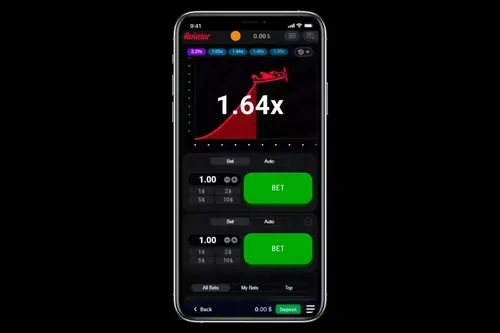
Unlike traditional slots, Aviator features no reels, paylines, or spinning symbols, but rather a single continuous multiplier that rises until the plane flies away. Players must manually cash out before this crash occurs to secure their winnings, creating a direct interaction loop distinct from passive spin outcomes. This unique mechanic shifts focus from symbol matching to timing decisions within a high-speed environment.
Bankroll rules that hold up
A defined bankroll is the specific sum of money allocated exclusively for gambling activities, separate from essential living expenses. For Aviator, which offers a maximum win cap of x1,000,000, preserving this capital is critical because the high-variance nature can deplete funds rapidly during losing streaks. A strict budget prevents emotional decision-making when the multiplier climbs unexpectedly high before crashing.
Operators may configure lower RTP settings than the standard 97.00%, such as 96.00% or even 94.00%, which directly increases the house advantage. When playing at a site with a 94.00% RTP, the house edge rises to 6.00%, meaning the bankroll erodes twice as fast compared to the theoretical maximum return. Selecting a platform with the highest available RTP is therefore a primary defense for long-term bankroll preservation.
Flat betting involves wagering the identical stake amount on every single round regardless of previous outcomes or current multiplier trends. This strategy avoids the pitfall of progressive staking, where increasing bets after losses merely accelerates the time to ruin without changing the built-in edge. Consistent small stakes allow the player to withstand the volatility inherent in Spribe's crash mechanics while monitoring the 3.00% edge impact.
Bet sizing against volatility
Aviator functions as a high-volatility instant game where outcomes are binary: either the player cashes out in profit or loses the entire stake when the plane departs. Unlike Dice by Spribe, which allows adjustable volatility and has a max win of x970, Aviator’s risk profile is fixed by its continuous multiplier curve. Understanding this volatility helps players size bets appropriately to survive extended dry spells where no crashes occur below low multipliers.
The dual-bet mode feature enables simultaneous wagers, allowing one bet to secure early profits while another chases higher multipliers for larger payouts. This approach requires precise calculation of total exposure per round to ensure neither stake exceeds the predetermined risk limit for that session. Effective management of these two concurrent bets balances the need for frequency against the potential for significant wins.
Auto cashout functionality sets a predefined multiplier threshold at which the system automatically secures winnings, removing human hesitation from the equation. If a player sets this at x2.00, they lock in a 100% return on that specific bet, mitigating the psychological pressure of watching the multiplier climb. Utilizing this tool consistently enforces discipline, preventing the common error of greedily holding positions until a sudden crash destroys the balance.
Session limits worth setting
Since Aviator rounds are extremely short, often lasting only seconds, a player can execute hundreds of bets in a single hour. Without explicit time boundaries, the rapid pace leads to fatigue and impaired judgment, significantly increasing the likelihood of deviating from pre-set strategies. Setting a hard stop after a specific duration protects mental acuity and ensures the session remains a controlled activity rather than an endless loop.
Loss limits define the maximum amount of the bankroll that can be surrendered before the session terminates, acting as a circuit breaker for financial damage. If a player starts with €100 and sets a loss limit of €50, the session ends immediately upon reaching that threshold, preserving half the capital for future play. This rule prevents the dangerous escalation of stakes that often follows a string of unlucky crashes where the plane flies away early.
Win goals establish a target profit level at which the player withdraws earnings, locking in gains before the house edge inevitably erodes them over time. Securing a portion of profits early creates a buffer that covers subsequent losses, effectively making the remaining bankroll risk-free. This practice contrasts with chasing the x1,000,000 maximum win, which is statistically rare and should not dictate routine session objectives.
Why chasing losses fails
Chasing losses involves increasing bet sizes after a deficit to recover previous money quickly, a behavior known as progressive staking. In Aviator, raising stakes does not alter the 3.00% house edge or improve the probability of winning the next round; it only magnifies the rate of capital depletion. The mathematical expectation remains negative regardless of the stake size, making recovery through increased betting a guaranteed path to ruin.
Each round in Aviator is an independent event governed by SHA-256 seeds, meaning past crashes have no influence on future multiplier trajectories. Believing that a win is 'due' after a series of losses is a cognitive bias that ignores the immutable randomness of the game's algorithm. Trusting in patterns or hot streaks leads to irrational betting decisions that contradict the statistical reality of the 97.00% RTP.
The multiplayer live bet feed displays real-time actions of other players, which can create social pressure to match aggressive betting behaviors. Observing others cash out at high multipliers may trigger envy, prompting a player to abandon their own strategy and chase similar returns with unsustainable stakes. Maintaining focus on one's own pre-defined plan and bankroll limits neutralizes this social influence and preserves logical decision-making.
Aviator: key facts
| Parameter | Value |
|---|---|
| Game | Aviator |
| Studio | Spribe |
| Released | 2019 |
| RTP | 97.00% |
| House edge | 3.00% |
| Max win | x1,000,000 |
Common systems and their limits
Aviator operates as a crash game with no reels, meaning traditional slot strategies fail immediately. The theoretical return is fixed at 97.00%, creating a house edge of 3.00% that applies to every single round regardless of betting patterns. This mathematical reality prevents any system from altering the long-term expected value for the player.
Unlike high-volatility titles such as Plane Game which also offers an RTP of 97.00%, Aviator relies on instant multipliers rather than spin outcomes. The provably fair mechanism uses SHA-256 hashing to ensure transparency, but this does not influence the negative expectation built into the game math. Players cannot use pattern recognition to overcome the inherent statistical disadvantage over time.
The maximum win cap stands at x1,000,000, providing a clear upper limit for potential payouts in any single session. While dual-bet mode allows two simultaneous wagers, it doubles the exposure to the house edge without changing the underlying odds. Consequently, complex betting grids offer no advantage against the continuous rise and inevitable crash of the multiplier.
Flat betting explained
Flat betting involves wagering the same stake amount during every round, maintaining a consistent level of risk exposure. With an RTP of 97.00%, each unit wagered retains 0.97 units of value on average across a vast number of trials. This approach minimizes variance compared to progressive methods, allowing players to manage their bankroll more predictably over extended sessions.
The game mechanics require cashing out before the plane flies away, making timing the critical variable rather than stake size adjustments. Since Spribe designed the algorithm with a 3.00% house edge, the total amount returned decreases steadily relative to the total amount bet. A flat strategy avoids the rapid depletion of funds associated with chasing losses through increased wagers.
Bankroll management benefits from this steady approach because it prevents catastrophic losses during cold streaks common in crash games. Unlike slots where paylines determine wins, here the entire outcome depends on the single decision to cash out before the crash point. Consistency in stake size ensures that the 3.00% edge plays out according to its mathematical definition without external interference.
Progressive staking risks
Progressive staking raises stakes after losses, aiming to recover previous deficits with a single winning round. However, this method does not change the built-in edge of 3.00% established by the 97.00% RTP configuration. Instead, it significantly shortens the time to ruin by increasing exposure during losing sequences that are statistically inevitable.
In Aviator, the crash point is random and unpredictable, meaning a losing streak can deplete even a large bankroll rapidly. Unlike table games with near-even chances, the multiplier can crash at x1.00, resulting in an immediate loss of the entire stake. Escalating bets under these conditions amplifies the financial impact of each failed cash-out attempt exponentially.
The maximum win of x1,000,000 remains accessible only if the player survives long enough to hit a high multiplier, which rare events do. Progressive systems often lead to hitting table limits or exhausting funds before a profitable outcome occurs. Mathematical analysis confirms that no betting progression can overcome a negative expectation game like this crash title.
Auto cashout features allow setting specific targets, but they cannot mitigate the risk introduced by raising base stakes after losses. The provably fair algorithm ensures past results do not influence future crashes, invalidating the core assumption of many progressive strategies. Players relying on this method face higher volatility and a greater probability of total bankroll loss.
What the maths actually allows
Theoretical return percentages like 97.00% represent long-run averages over hundreds of thousands of rounds, not short-term guarantees. Each individual round has an independent probability distribution determined by the server seed and client seeds combined via SHA-256. This independence means previous outcomes provide zero predictive power for future multiplier behavior.
Operators may configure lower RTP settings of 96% or 94%, which increases the house edge to 4.00% or 6.00% respectively. These variations directly reduce the expected value of every euro wagered, making some versions less favorable than others. Players must verify the specific game version to understand the exact mathematical disadvantage they face.
Volatility in Aviator is determined by the frequency and magnitude of crashes, ranging from low multipliers to the x1,000,000 cap. High volatility implies fewer frequent wins but larger potential payouts, requiring a robust bankroll to withstand dry spells. The dual-bet mode allows hedging strategies, but both bets are subject to the same underlying mathematical expectations.
Certification by iTech Labs and BMM Testlabs verifies the integrity of the random number generation process used in the crash algorithm. These audits confirm that the stated RTP and volatility profiles match the actual gameplay mechanics observed over millions of rounds. Such verification provides assurance that the game operates within its declared parameters without hidden manipulations.
Reading variance honestly
Variance describes the fluctuation of results around the mean return, causing significant swings in bankroll size during play sessions. In Aviator, the crash point can occur instantly at low multipliers or soar to extreme heights, creating unpredictable payout patterns. Understanding this variance helps players set realistic expectations for short-term performance versus long-term trends.
The live bet feed shows real-time wagers and cash-outs, illustrating how other players react to rising multipliers in real time. This social element can influence individual decisions, but it does not alter the underlying probabilities governed by the SHA-256 algorithm. Observing others cash out early or late provides entertainment value but no strategic advantage in predicting the crash.
Max win caps at x1,000,000 limit the upside potential, ensuring the operator manages liability while offering substantial rewards. This cap interacts with variance by capping the largest possible positive deviation from the expected return in any single round. Players should recognize that hitting this maximum is a rare event driven by luck rather than skill or strategy.
Provably fair technology allows players to verify each round's outcome using public seeds, ensuring transparency in the crash determination. This feature builds trust in the randomness of the multiplier rise, confirming that results are not manipulated by the studio. Honest assessment of variance requires accepting that luck dominates short-term results despite the fixed house edge.
Learning the game in demo first
Spribe launched Aviator in 2019 as a distinct crash mechanic that replaces traditional slot structures with a continuous rising multiplier curve. The theoretical RTP stands at 97.00%, which establishes a 3.00% house edge over extended play sessions and long-term statistical averages. This high return rate suggests that players should prioritize understanding the cash-out timing rather than relying on fixed payline patterns or symbol combinations.
The core loop involves watching a plane ascend while the multiplier increases until it randomly crashes, requiring immediate action to secure winnings before the round ends. Provably fair technology utilizes SHA-256 hashes combining server seeds with client seeds and a nonce to ensure transparency for every single outcome generated. Certification from iTech Labs and BMM Testlabs confirms that these mathematical models operate exactly as published without hidden algorithmic biases.
Unlike Tower Rush by Galaxsys which caps wins at 100x, Aviator allows maximum payouts up to x1,000,000, creating vastly different risk profiles for participants. Dual-bet mode lets players place two simultaneous wagers with independent auto cashout settings, adding strategic depth to each individual round phase. Demo modes allow users to practice this timing-based skill without risking real funds during the initial learning curve of the interface.
Adjusting stakes to your budget
A disciplined bankroll management strategy requires setting aside a specific amount of money for play before opening the Spribe Aviator interface for any session. Flat betting involves wagering the identical stake amount on every single round regardless of previous outcomes, which helps preserve the allocated funds longer. Progressive staking systems that raise stakes after losses do not alter the built-in 3.00% house edge but significantly shorten the time to ruin.
The 97.00% RTP figure represents a theoretical return calculated over hundreds of thousands of rounds, meaning short-term variance can deviate wildly from this average. Operators may configure lower RTP versions such as 96% or 94%, so verifying the specific game version is crucial for accurate expected value calculations. Understanding this distinction prevents players from misinterpreting temporary losing streaks as evidence of broken mechanics when the underlying mathematics remain unchanged.
Comparing Aviator to slots reveals that instant games require faster decision-making cycles, often resulting in more bets placed per hour than reel-based alternatives. The maximum win potential of x1,000,000 attracts high-risk players who might ignore bankroll limits in pursuit of rare large multipliers. Setting strict loss limits based on the total bankroll ensures that emotional chasing does not lead to financial damage during volatile sessions.
Recognising a bad session
A session becomes statistically unfavorable when the actual return drops significantly below the advertised 97.00% RTP over a substantial number of rounds played. If a player experiences rapid depletion of their bankroll due to frequent early crashes, they are likely encountering negative variance typical of high-volatility games. Recognizing this pattern early allows for better control over subsequent betting decisions and prevents the common pitfall of trying to recover losses immediately.
The multiplayer live bet feed displays real-time wagers from other participants, providing social proof that can influence individual behavior during intense gameplay moments. Seeing others cash out successfully might tempt a player to delay their own withdrawal, increasing the probability of losing the entire stake in that round. This herd mentality often exacerbates losses when the multiplier suddenly flies away before the delayed cashout action can be executed by the user.
Unlike Tower Rush with its fixed 100x max win cap, Aviator's unlimited ceiling creates psychological pressure to hold positions longer than mathematically advisable. The dual-bet feature can mask losses if one bet wins while the other crashes, giving a false sense of security about overall profitability. Tracking total turnover against the initial deposit provides an objective measure of session health rather than relying on subjective feelings of luck.
Stopping while ahead
Securing profits requires defining a clear target profit margin relative to the initial bankroll before engaging with the Spribe Aviator crash mechanism. When the accumulated winnings reach a predetermined percentage above the starting balance, withdrawing those funds locks in gains against future unpredictable crashes. This discipline counteracts the natural human tendency to reinvest all profits into hoping for even larger multipliers during the same session period.
The provably fair system ensures that past results have no bearing on future outcomes, meaning a winning streak does not guarantee continued success. Relying on momentum or perceived hot streaks often leads to giving back all previously secured profits when the random number generator finally triggers a crash. Maintaining a separate record of withdrawals helps visualize actual earnings versus gross turnover, providing clarity on true financial performance over time.
Comparing Aviator to Tower Rush highlights how different max win structures affect exit strategies, with the latter offering predictable upper bounds for risk assessment. The 97.00% RTP implies that long-term retention is possible only through strict adherence to pre-defined stopping rules and consistent bankroll management practices. Players who withdraw regularly protect their capital from the inevitable regression to the mean that characterizes all casino games with a house edge.
Responsible play in practice
Implementing responsible gambling tools involves setting daily loss limits and time restrictions within the casino account to prevent excessive engagement with the Aviator game. The 3.00% house edge guarantees that the operator retains a portion of all wagers over time, making sustained profitability impossible for the majority of players. Acknowledging this mathematical reality helps players approach the game as entertainment rather than a viable method for generating income or solving financial problems.
Self-exclusion features and deposit limits provide structural safeguards that complement personal willpower when dealing with the fast-paced nature of instant crash games. The availability of a demo mode allows users to understand the mechanics without financial risk, fostering a healthier relationship with the gambling activity itself. Utilizing these tools proactively ensures that play remains within affordable boundaries and does not escalate into problematic behavior during periods of stress.
Bonus terms like a 300% welcome bonus up to €2,000 plus 100 free spins must be evaluated carefully regarding their impact on playstyle. Wagering requirements attached to such bonuses often encourage higher volume betting, which accelerates the erosion of the bankroll due to the inherent house advantage. Reading these conditions thoroughly prevents unexpected restrictions on withdrawals and ensures that promotional offers align with sustainable and responsible gaming habits.
DemoRTP & VolatilityHow to PlayAuto CashoutStrategyBonusesMobileDownload & AppMax WinSimilar GamesReviewFAQSitemap
Aviator 2026